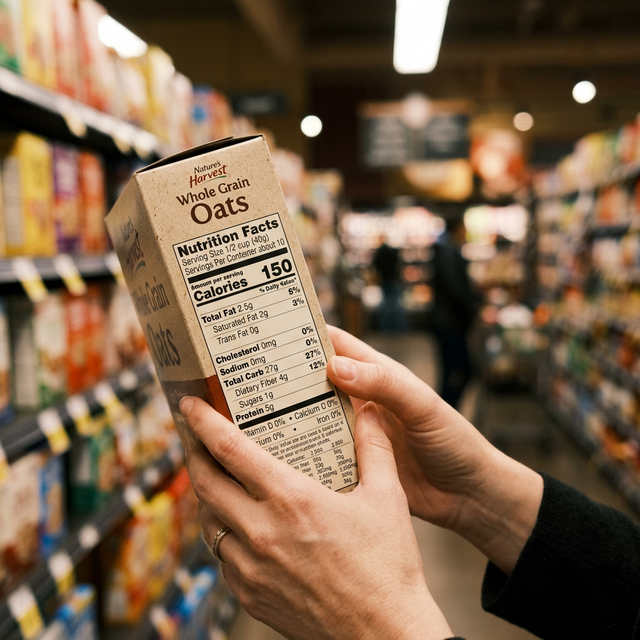
Every packaged food product in the United States is required to display a nutrition facts label. It's right there on the package, waiting to tell you exactly what you're about to put into your body. Yet surveys consistently show that fewer than 30% of consumers actually read and understand these labels before making purchasing decisions.
That's a staggering missed opportunity. The nutrition label is the most powerful tool you have for making informed food choices, controlling your calorie intake, managing your sugar consumption, and protecting your long-term health. The problem isn't that the information isn't available — it's that most people were never taught how to read it correctly.
This comprehensive guide will change that. By the time you finish reading, you'll be able to pick up any food product, scan its label in under 30 seconds, and make a confident, informed decision about whether it belongs in your cart. No guesswork. No confusion. Just clarity.
Why Reading Nutrition Labels Matters More Than Ever
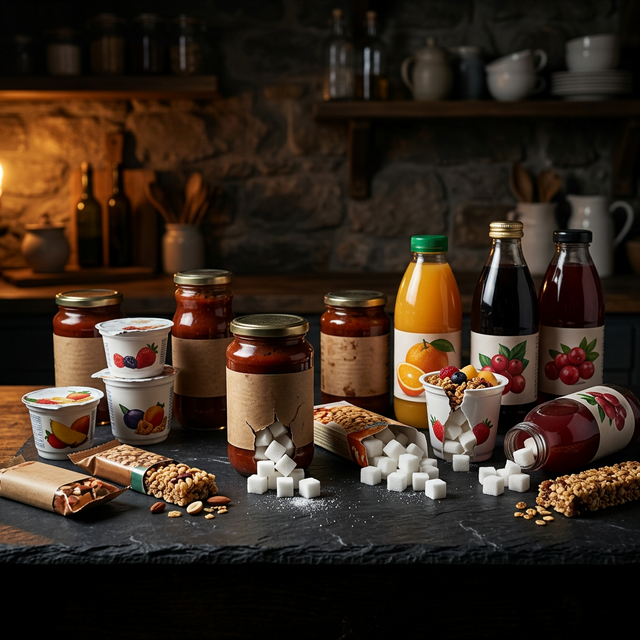
In a world where 74% of packaged foods contain added sugar and food marketing is specifically designed to make unhealthy products appear healthy, nutrition label literacy isn't just nice to have — it's essential for anyone who wants to take control of their diet.
Consider these eye-opening facts:
- Misleading front labels: The front of a package is pure marketing. Claims like "natural," "wholesome," "made with real fruit," and "lightly sweetened" have no standardized definitions and are frequently used on products loaded with sugar, sodium, and artificial ingredients
- Serving size manipulation: Many manufacturers use unrealistically small serving sizes to make their products appear healthier than they actually are. That "110 calorie" bag of chips? It actually contains 2.5 servings, making the real total 275 calories
- Health halo effect: Products labeled "organic," "gluten-free," or "non-GMO" are perceived as healthier, even when they contain just as many calories, sugars, and unhealthy fats as conventional alternatives
The only reliable source of truth about what's actually in your food is the Nutrition Facts panel and the ingredient list on the back of the package. Learning to read them quickly and accurately is one of the highest-impact health skills you can develop.
Anatomy of a Nutrition Label: Every Section Explained
The FDA's updated Nutrition Facts label, implemented in 2020, was redesigned to make key information more prominent and easier to understand. Let's break down every section from top to bottom.
Serving Size and Servings Per Container
This is the foundation of everything else on the label. Every single number that follows is based on this serving size. If the serving size is "1 cup (228g)" and you eat two cups, you need to double every value on the label.
The updated labels now use serving sizes that more accurately reflect how much people actually eat, rather than how much they "should" eat. For example, ice cream serving sizes increased from ½ cup to ⅔ cup, and soda labels now list the entire 20-ounce bottle as one serving instead of 2.5 servings.
Key tip: Always check servings per container. A small bag of trail mix might list "3 servings" — if you eat the whole bag, multiply everything by three.
Total Calories
Calories tell you how much energy you'll get from one serving. The updated label displays calories in large, bold font to make this information impossible to miss. For a general guide:
- 40 calories per serving = low calorie
- 100 calories per serving = moderate
- 400+ calories per serving = high calorie
However, calories alone don't tell the full story. 200 calories from almonds and 200 calories from candy affect your body very differently. That's why the sections below matter just as much. For a deeper dive into calorie tracking, check out our complete guide to calorie tracking for beginners.
The Nutrient Breakdown
This section lists macronutrients (fat, carbohydrates, protein) and key micronutrients. Here's what to focus on:
Nutrients to LIMIT (aim for lower amounts):
- Saturated Fat: Limit to less than 10% of daily calories (about 20g on a 2,000-calorie diet)
- Trans Fat: Avoid entirely. Even 0g listed can mean up to 0.5g per serving
- Sodium: Keep under 2,300mg daily. Most Americans consume about 3,400mg
- Added Sugars: Limit to 25g/day for women, 36g/day for men
Nutrients to GET MORE OF:
- Dietary Fiber: Aim for 25-30g daily. Most Americans get only 15g
- Vitamin D and Calcium: Critical for bone health, now required on labels
- Iron and Potassium: Many Americans are deficient in both
- Protein: Essential for satiety and muscle maintenance
Percent Daily Value (%DV)
The %DV column is your quickest reference tool. It tells you what percentage of your daily needs one serving of this food provides, based on a standard 2,000-calorie diet.
Use the 5/20 rule as your mental shortcut:
- 5% DV or less = LOW — Good for nutrients you want to limit (sodium, saturated fat, added sugars)
- 20% DV or more = HIGH — Good for nutrients you want more of (fiber, vitamin D, calcium, potassium), but concerning for nutrients you should limit
For example, if a product shows 25% DV for sodium in one serving, that single serving provides a quarter of your entire day's sodium allowance — that's a lot.
Total Sugars vs. Added Sugars
This is one of the most important sections of the label, especially for health-conscious consumers. Understanding the difference between total and added sugars is critical:
Total Sugars includes both natural sugars (like lactose in milk or fructose in fruit-containing products) and added sugars. This number alone can be misleading — plain milk has about 12g of total sugar per cup, all from naturally occurring lactose.
Added Sugars is the line you really need to watch. These are sugars added during processing and have no nutritional benefit. The daily recommended limit is 25 grams for women and 36 grams for men.
If a product has a low total sugar count but relatively high added sugars, that's a red flag. It means most or all of the sugar was deliberately added. Our guide on hidden sugars reveals which everyday foods contain shockingly high amounts of added sugar.
The Ingredient List
While technically separate from the Nutrition Facts panel, the ingredient list is equally important. Here are the rules:
- Ingredients are listed in descending order by weight. The first ingredient makes up the largest portion of the product
- Shorter lists are generally better. The fewer ingredients, the less processed the food
- If you can't pronounce it, research it. Unfamiliar chemical names may be additives, preservatives, or hidden sugars
- Watch for multiple sugar sources. Manufacturers split sugar into three or four different types so no single sugar appears first on the list
The 5/20 Rule: Your Quick-Reference System for Any Label
If you remember nothing else from this article, remember the 5/20 rule. It's the fastest way to evaluate whether a food is a good or poor choice:
| %DV | Meaning | Good For... | Bad For... |
|---|---|---|---|
| 5% or less | LOW amount | Sodium, Saturated Fat, Added Sugars | Fiber, Vitamin D, Calcium, Iron |
| 6-19% | MODERATE amount | Context-dependent | Context-dependent |
| 20% or more | HIGH amount | Fiber, Vitamin D, Calcium, Iron, Potassium | Sodium, Saturated Fat, Added Sugars |
Using this rule, you can evaluate any product in seconds. Pick it up, flip to the Nutrition Facts, check the %DV column for the nutrients that matter most to your goals, and decide. It becomes second nature with practice.
Common Label-Reading Mistakes (and How to Avoid Them)
Mistake 1: Ignoring the Serving Size
This is the number-one label-reading error. That bag of chips shows 150 calories — sounds reasonable, right? But the bag contains 3 servings. If you eat the whole thing (and let's be honest, most people do), you've consumed 450 calories. Always multiply by the number of servings you actually eat.
Mistake 2: Trusting Front-of-Package Claims
The front of the package is advertising, not information. "Made with whole grains" might mean the product contains 2% whole grains and 98% refined flour. "Reduced sugar" means 25% less sugar than the original version — but if the original had 40g, "reduced" still means 30g. Always verify claims against the Nutrition Facts panel.
Mistake 3: Focusing Only on Calories
A product can be low-calorie and still be nutritionally poor. Many "100-calorie pack" snacks are essentially sugar and refined carbs with minimal nutritional value. Conversely, foods like nuts and avocados are calorie-dense but packed with healthy fats, fiber, and important micronutrients. Quality matters as much as quantity.
Mistake 4: Overlooking Added Sugars
Many people check total calories and maybe total fat, but completely skip the added sugars line. This is a critical oversight. A single flavored yogurt can contain 19-26 grams of added sugar — potentially your entire day's recommended limit. The added sugars line is arguably the most important number on the entire label. Learn more about simple swaps to reduce your sugar intake.
Mistake 5: Assuming "Natural" Means Healthy
The term "natural" has no standardized FDA definition for most food products. Products labeled "all-natural" can still contain large amounts of sugar, sodium, saturated fat, and artificial ingredients. Similarly, "organic sugar" is still sugar — your body processes it identically to conventional sugar.
Mistake 6: Not Comparing Brands
The sugar and sodium content in similar products can vary enormously between brands. One brand of pasta sauce might have 4 grams of sugar per serving while another has 12 grams. Take 10 seconds to compare two or three options — it can save you significant amounts of unnecessary sugar, sodium, and calories over time.
💡 The 30-Second Label Scan Method
Here's your quick-scan routine for any product: (1) Check serving size and how many servings you'll actually eat. (2) Look at calories — is it reasonable? (3) Check added sugars — aim for 5% DV or less. (4) Check sodium — aim for 5% DV or less. (5) Check fiber — aim for 20% DV or more. (6) Scan the first five ingredients — do they sound like real food? If you can answer yes to most of these checks, the product is likely a good choice.
Special Label Situations: What to Watch Out For
"Sugar-Free" and "No Sugar Added" Products
"Sugar-free" means the product contains less than 0.5g of sugar per serving. However, it may contain sugar alcohols (like erythritol, sorbitol, or maltitol) or artificial sweeteners (sucralose, aspartame), all of which have their own considerations. "No sugar added" means no sugar was added during processing, but the food may still contain significant natural sugars. For a comprehensive comparison, read our guide on natural sweeteners vs. artificial sweeteners.
"Low-Fat" and "Fat-Free" Products
When manufacturers remove fat, they typically add sugar to maintain flavor and texture. A "low-fat" salad dressing may have half the fat of the original but double the sugar. Always compare the full nutritional profiles, not just the highlighted claim.
Multi-Serving Packages
Some products now include a "dual column" label that shows nutritional information for both one serving and the entire package. This is incredibly helpful for products that people commonly eat in one sitting, like a pint of ice cream or a bag of popcorn. If you see dual columns, always pay attention to the "per package" column for a realistic picture of your intake.
Restaurant and Prepared Foods
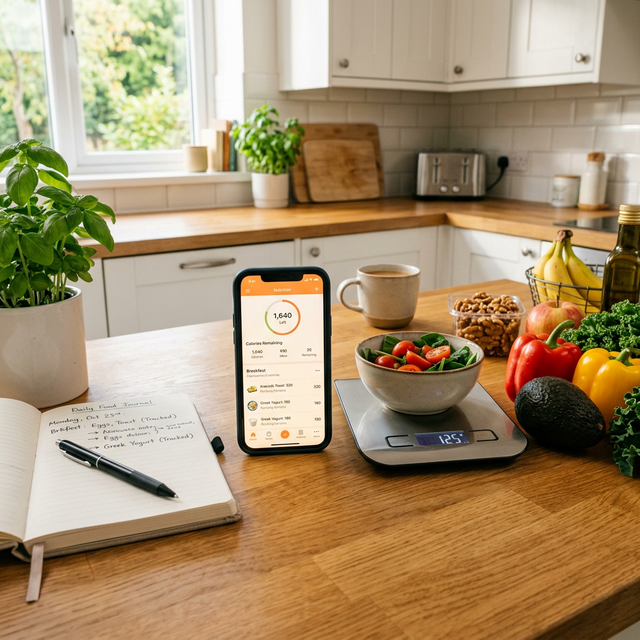
Restaurants with 20 or more locations are required to list calorie information on their menus. However, they're not required to display the detailed breakdown you find on packaged food labels. This is where food tracking tools become invaluable — apps like SugarWise include database entries for thousands of restaurant items, giving you the full nutritional picture.
Take the Guesswork Out of Nutrition Tracking
SugarWise decodes nutrition information instantly. Scan, log, and track your sugar, calories, and macros with real-time insights. No manual label reading required.
Putting It All Together: A Real-World Example
Let's walk through a real-world example to see how label reading works in practice. Imagine you're at the grocery store comparing two brands of Greek yogurt.
Brand A: "Fruit Blend Greek Yogurt"
| Serving Size | 1 container (150g) |
| Calories | 180 |
| Total Fat | 1.5g (2% DV) |
| Total Sugars | 24g |
| Added Sugars | 16g (32% DV) |
| Protein | 12g |
| Fiber | 0g |
Top ingredients: Nonfat yogurt, strawberry puree, cane sugar, fruit pectin, natural flavors
Brand B: "Plain Greek Yogurt"
| Serving Size | 1 container (150g) |
| Calories | 120 |
| Total Fat | 3g (4% DV) |
| Total Sugars | 5g |
| Added Sugars | 0g (0% DV) |
| Protein | 17g |
| Fiber | 0g |
Top ingredients: Pasteurized nonfat milk, cream, live active cultures
The Analysis
Brand A has 32% of your daily added sugar limit in a single container — before you've eaten anything else. Brand B has zero added sugar, 60 fewer calories, 5 more grams of protein, and only 3 ingredients. The clear winner is Brand B. Add your own fresh berries and a drizzle of honey (about 6g of sugar per teaspoon, but you control the amount), and you'll have a far more nutritious meal than Brand A provides.
This is the power of label reading. Without looking at the nutrition facts, Brand A might look healthier — it has "fruit" right in the name and a lower fat content. But the numbers tell a completely different story.
Advanced Label Reading: Beyond the Basics
Understanding Protein Quality
Not all protein sources are equal. "Complete proteins" contain all nine essential amino acids and come from animal sources (dairy, meat, eggs) and a few plant sources (soy, quinoa). When comparing protein bars or supplements, look for complete protein sources listed early in the ingredient list.
Fiber: Naturally Occurring vs. Added
Some products boost their fiber content by adding isolated fibers like inulin, chicory root fiber, or polydextrose. While these may count toward the fiber number on the label, research suggests they don't provide the same health benefits as fiber naturally present in whole foods. Check the ingredient list — if the fiber is from whole grains, vegetables, or fruits, it's more beneficial.
The Sodium-Sugar Connection
Many processed foods contain both high sodium and high sugar because they work together to enhance flavor. If a product is high in sodium, check the sugar content too — and vice versa. Reducing one without checking the other can leave you with a product that's still unhealthy.
Understanding "% Daily Value" Limitations
The %DV is based on a 2,000-calorie diet, which may not match your actual needs. If you're an active adult consuming 2,500 calories, the percentages will understate your actual intake relative to your needs. Conversely, if you're targeting 1,600 calories for weight loss, the %DV will overstate. Use it as a general guide, but calculate actual grams for the nutrients most important to your goals.
Nutrition Label FAQs
What is the most important thing to look at on a nutrition label?
The serving size is the most important thing to check first, as all other values on the label are based on this amount. After that, focus on added sugars, total calories, and the ingredient list to understand what you're actually eating.
What does 5% and 20% Daily Value mean on food labels?
The 5/20 rule is a quick guide: 5% Daily Value or less is considered low for that nutrient, while 20% DV or more is considered high. Use this to limit nutrients like sodium, saturated fat, and added sugars (aim for ≤5% DV) and to get enough beneficial nutrients like fiber, vitamins, and minerals (aim for ≥20% DV).
What's the difference between total sugar and added sugar on food labels?
Total sugar includes both natural sugars (like lactose in dairy or fructose in fruit) and added sugars. Added sugar is the sugar that manufacturers add during processing. Focus primarily on the added sugars line — the American Heart Association recommends no more than 25g per day for women and 36g for men.
Your Action Plan: Becoming a Label-Reading Pro
Reading nutrition labels doesn't have to be a chore. Like any skill, it becomes second nature with practice. Here's your action plan for the next two weeks:
- Week 1: Start by checking the added sugars and serving size on everything you eat. Just those two lines. Don't worry about the rest yet.
- Week 1: Download SugarWise and log your meals for the week. Seeing your actual sugar intake in black and white is incredibly motivating.
- Week 2: Add the 5/20 rule to your scanning routine — check %DV for sodium, fiber, and saturated fat in addition to sugars.
- Week 2: Compare brands for your most-purchased products. Find lower-sugar and lower-sodium alternatives for the items you buy every week.
- Ongoing: Scan the ingredient list on any new product. If sugar appears in the first five ingredients, look for an alternative.
The food industry spends billions of dollars on marketing designed to confuse you. Nutrition label literacy is your defense against misleading claims and hidden ingredients. Once you can read labels fluently, you'll never look at packaged food the same way again — and your body will thank you for it.
Let SugarWise Read the Labels For You
Tired of squinting at tiny print? SugarWise instantly breaks down the nutrition in any meal — sugar, calories, protein, and more. Set daily goals and track your progress effortlessly.
Download SugarWise on Google Play →