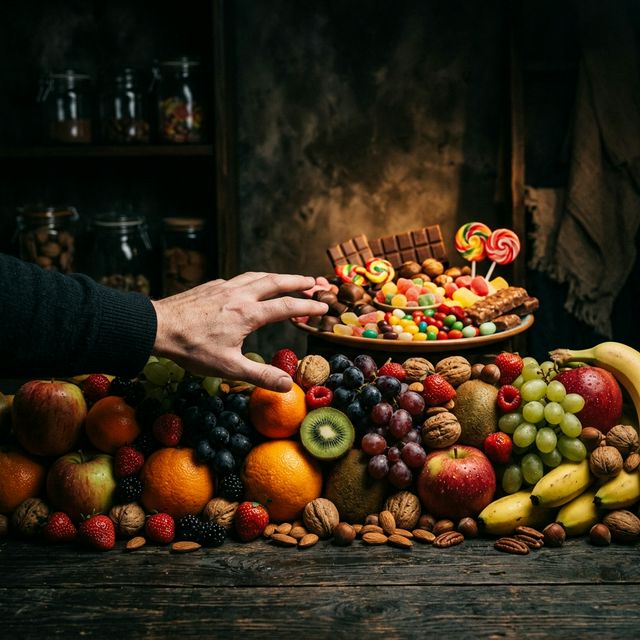
It's 3pm. You've eaten a perfectly reasonable lunch. You're not hungry. And yet every cell in your body is screaming for chocolate, biscuits, gummy bears — anything sweet. You try to resist. You last about 12 minutes. Then you're elbow-deep in a packet of Hobnobs, hating yourself while simultaneously reaching for another one.
Sound familiar? You're not weak. You're not lacking discipline. You're fighting against one of the most powerful neurochemical drives the human brain can produce — and you've been fighting it with willpower alone, which is like trying to put out a house fire with a teaspoon of water.
Sugar cravings are a biochemical problem, not a character flaw. They're driven by blood sugar instability, dopamine dysfunction, and hormonal signals that have nothing to do with moral failing. And once you understand the mechanism behind the craving, you can dismantle it at the source. These 12 methods do exactly that.
Why You Crave Sugar: The Science
Before we jump into solutions, you need to understand what's actually happening in your brain when a craving hits. Otherwise, the fixes won't stick.
When you eat sugar, your brain releases dopamine — the "reward" neurotransmitter. Same chemical, same brain region, as cocaine, nicotine, and gambling. Your brain lights up, you feel a rush of pleasure, and everything is wonderful... for about 20 minutes. Then it's gone. And your brain wants it back.
Over time — we're talking weeks and months of regular sugar consumption — your brain downregulates its dopamine receptors. This means it takes more sugar to produce the same feeling. A square of chocolate used to do the trick; now you need half the bar. That's tolerance. That's how addiction works. And yes, sugar meets the clinical definition of an addictive substance.
The second driver is blood sugar instability. When you eat refined sugar, your blood glucose spikes sharply and then crashes below baseline. That crash triggers a survival response: your brain interprets low blood sugar as a threat and generates an urgent craving for more quick-energy sugar. You're not hungry — your body is panicking.
The 12 Methods
1. Eat Protein at Every Meal (Non-Negotiable)
This is the single most effective anti-craving strategy in existence. Protein slows the digestion of carbohydrates, flattens your blood sugar curve, and triggers satiety hormones (peptide YY and GLP-1) that tell your brain you're full. When your blood sugar is stable, cravings don't fire. Aim for at least 25-30 grams of protein at breakfast, lunch, and dinner. Eggs, chicken, fish, Greek yoghurt, cottage cheese — doesn't matter what, just make sure it's there.
2. Stop Eating "Naked Carbs"
A "naked carb" is any carbohydrate eaten on its own without protein or fat. A piece of toast by itself. A banana by itself. A bowl of cereal with skim milk. These get absorbed incredibly fast and spike your blood sugar — which leads to a crash — which leads to a craving. Always pair carbs with protein or fat. Toast? Add avocado and eggs. Banana? Eat it with almond butter. This one rule eliminates the spike-crash-crave cycle.
3. Drink Water First
This sounds insultingly simple, but it works. Dehydration mimics hunger and amplifies cravings. When a craving hits, drink a large glass of water and wait 15 minutes. In roughly 50% of cases, the craving will pass entirely. Your body was thirsty, not sugar-deprived. Carry a water bottle. Drink before you snack.
4. Get 7-8 Hours of Sleep
Sleep deprivation is a craving multiplier. Just one night of poor sleep increases ghrelin (hunger hormone) by 28% and decreases leptin (fullness hormone) by 18%. Worse, it specifically increases cravings for high-sugar, high-fat foods because your exhausted brain desperately wants quick energy. Fix your sleep and you'll be genuinely shocked at how much easier it is to resist sugar.
5. Eat Within the First Hour of Waking
Skipping breakfast — or eating a sugary one — sets the craving tone for your entire day. A protein-rich, low-sugar breakfast within the first hour of waking stabilises your blood sugar, reduces cortisol, and creates a metabolic environment where cravings simply don't trigger as intensely. Eggs, Greek yoghurt, or a protein smoothie — not cereal, not toast and jam.
6. Take a 10-Minute Walk When Cravings Hit
Physical movement — even gentle walking — changes your brain chemistry in real time. A 15-minute brisk walk reduces chocolate cravings by 12% according to research from the University of Exeter. Walking releases endorphins (natural mood-boosters) and burns off stress hormones that amplify cravings. When the urge hits, move your body. By the time you're back, the craving will be gone or dramatically reduced.
See Where the Sugar Is Actually Hiding
You can't beat cravings if you don't know what's triggering them. SugarWise shows you your real-time sugar intake — so you can identify the hidden sources driving your cravings.
7. Replace, Don't Remove
Cold-turkey sugar elimination backfires for most people. Your brain interprets it as deprivation and responds by ramping cravings up to 11. Instead, swap sugar for better alternatives gradually. Berries instead of sweets. Dark chocolate (80%+) instead of milk chocolate. Sparkling water with lemon instead of Coke. You're still giving your brain a reward — just a less destructive one.
8. Eat More Fibre
Fibre slows the absorption of sugar, which prevents the spike-crash cycle. It also feeds beneficial gut bacteria that produce short-chain fatty acids linked to reduced appetite. Aim for 25-30g of fibre daily from vegetables, legumes, whole grains, and gut-friendly foods. Most people eating a standard Western diet get about 15g — half what they need.
9. Manage Stress (Before It Manages You)
Cortisol — the stress hormone — directly increases sugar cravings. When you're stressed, your body craves quick-release energy to fuel a "fight or flight" response. In the modern world, that means reaching for biscuits, not running from a tiger. Find a stress management practice that works for you: deep breathing, meditation, journalling, exercise, or just stepping outside for 5 minutes. Reducing cortisol reduces cravings. It's that direct.
10. Supplement Strategically
Certain nutrient deficiencies make cravings worse:
- Magnesium: Chocolate cravings often signal magnesium deficiency. Take 200-400mg daily.
- Chromium: Helps regulate blood sugar and reduce carb/sugar cravings. 200mcg daily.
- L-Glutamine: An amino acid that can reduce cravings quickly when taken during a craving episode. 500mg when cravings hit.
- B vitamins: Support energy metabolism and reduce the fatigue that drives sugar-seeking behaviour.
11. Brush Your Teeth After Meals
This psychological trick is weirdly effective. The fresh minty taste in your mouth creates a mental "end of eating" signal, and the prospect of brushing again acts as a friction barrier against snacking. Plus, sugar tastes terrible after toothpaste. Many people report that this simple habit cut their post-meal sugar snacking by 80% or more.
12. Track Your Sugar Intake for One Week
Awareness is the most powerful behaviour change tool in existence. When you track every gram of sugar you eat for just seven days, two things happen. First, you're horrified at how much you're actually consuming — most people eat 2-3x the recommended amount without realising it. Second, the act of tracking itself creates mindfulness that naturally reduces consumption. You think twice before grabbing that biscuit when you know you'll have to log it.
Sugar Cravings FAQs
Why do I crave sugar so much?
Three main drivers: blood sugar instability (the spike-crash cycle creates a biochemical need for more sugar), dopamine tolerance (your brain's reward system adapts and demands more), and nutrient deficiencies (especially magnesium and chromium). Stress, poor sleep, and dehydration amplify all three. It's brain chemistry, not weak willpower.
How long until sugar cravings go away?
Intense cravings typically decrease within 7-10 days of cutting added sugar below 25g/day. Days 3-5 are the worst — headaches, irritability, and fatigue are common during this sugar withdrawal period. By day 14, most people find sweet foods taste "too sweet." Full dopamine receptor recovery takes 4-6 weeks.
Does eating fruit help with sugar cravings?
Yes, absolutely. Whole fruit is one of your best weapons. The natural sugars come wrapped in fibre and water, which prevent blood sugar spikes. Berries, apples, and citrus are ideal — sweet enough to scratch the itch, low enough on the glycemic index to keep you stable. Avoid dried fruit and fruit juice — those are concentrated sugar with the fibre stripped out.
The Real Takeaway
Sugar cravings feel overwhelming because they are a powerful biological drive. But they're also entirely fixable. You don't need an iron will. You need stable blood sugar, adequate protein, decent sleep, and the awareness of where sugar is sneaking into your diet. Fix those four things and the cravings won't just decrease — for many people, they virtually disappear.
Start with methods 1 and 2 today. Just add protein to every meal and stop eating naked carbs. You'll feel the difference within 48 hours. Then layer in the rest over the coming weeks. This isn't about perfect — it's about better. And better starts right now.
Break the Cycle for Good
SugarWise tracks your daily sugar in real time, showing you exactly which foods trigger your cravings. See the pattern, break the pattern.