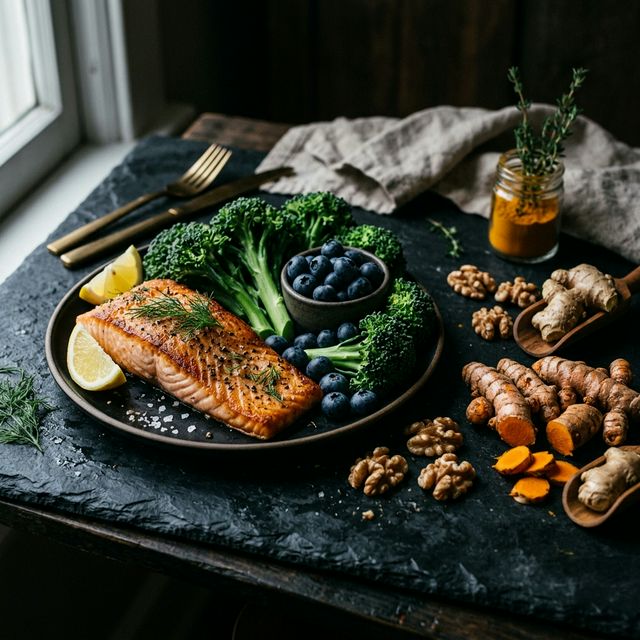
Here's something that might surprise you: that nagging knee pain, the afternoon brain fog, your skin breaking out for no obvious reason, even that stubborn belly fat that won't budge — there's a decent chance they all share the same root cause. Chronic inflammation.
Not the kind you get when you twist your ankle (that's acute inflammation, and it's actually helpful). We're talking about the slow-burning, invisible kind that simmers inside your body for months or years, quietly damaging your organs, joints, and blood vessels while you go about your day thinking everything is fine.
And here's the kicker: what you eat can either pour fuel on that fire or put it out. That's not some wellness-influencer opinion — it's backed by decades of research from Harvard, Oxford, and the American Heart Association. So let's get into it. Which foods fight inflammation, which ones make it worse, and what does a realistic anti-inflammatory week actually look like?
Wait — What Is Chronic Inflammation, Exactly?
Let's keep this simple. When you cut your finger, your immune system sends white blood cells to fight infection and repair the tissue. The area gets red, swollen, and warm. That's inflammation doing its job. Within a few days, it's done and your body stands down.
Chronic inflammation is what happens when your immune system never stands down. It keeps firing — low-grade, constant, systemic — because something in your environment keeps triggering it. And the biggest everyday trigger? The food on your plate.
Research published in Nature Medicine found that over 50% of deaths worldwide are associated with inflammation-related diseases: heart disease, stroke, cancer, diabetes, kidney disease, and Alzheimer's. Most of these conditions take years to develop, which means you have a massive window to intervene — if you know what to change.
The 15 Best Anti-Inflammatory Foods (Eat More of These)
These aren't exotic superfoods you need to order from some specialty website. They're normal, affordable foods you can find at any grocery store. The trick is making them the foundation of your meals rather than an afterthought.
🐟 Fatty Fish
Salmon, sardines, mackerel, and anchovies are absolutely loaded with EPA and DHA — the omega-3 fatty acids your body uses to produce resolvins and protectins, which actively switch off inflammatory pathways. Aim for two to three servings per week. Wild-caught is ideal, but don't let perfect be the enemy of good — canned sardines count and they're dirt cheap.
🫐 Berries
Blueberries, strawberries, blackberries, and raspberries are packed with anthocyanins — the pigments that give them their deep colour. These compounds have been shown to reduce inflammatory markers like C-reactive protein (CRP) and IL-6 in multiple clinical trials. A daily handful is all you need.
🥬 Dark Leafy Greens
Spinach, kale, Swiss chard, and rocket (arugula) deliver vitamins A, C, K, and folate — all of which support your body's natural anti-inflammatory defences. Kale in particular contains kaempferol, a flavonoid that's been shown to block pro-inflammatory enzymes in the body.
🫒 Extra Virgin Olive Oil
This is the secret weapon of the Mediterranean diet. EVOO contains a compound called oleocanthal that works remarkably like ibuprofen — so much so that researchers who discovered it described the characteristic throat-stinging sensation as proof of its potency. Use it raw on salads or for low-to-medium heat cooking.
🥑 More Anti-Inflammatory Powerhouses
- Avocados — rich in monounsaturated fats and potassium
- Walnuts — the highest omega-3 content of any nut
- Turmeric — curcumin is one of the most researched anti-inflammatory compounds on the planet (pair with black pepper to boost absorption by 2000%)
- Ginger — reduces muscle soreness and joint stiffness
- Tomatoes — lycopene is more bioavailable when cooked
- Green tea — EGCG blocks inflammatory cytokines
- Dark chocolate (70%+ cocoa) — flavanols reduce vascular inflammation
- Garlic and onions — organosulfur compounds that modulate immune response
- Beans and lentils — high in fibre and resistant starch, feeding beneficial gut bacteria
- Broccoli and Brussels sprouts — sulforaphane activates Nrf2, your body's master antioxidant switch
- Sweet potatoes — anti-inflammatory beta-carotene without the blood sugar spike of white potatoes
🔑 The Mediterranean Pattern
You don't need to follow a rigid "diet." The Mediterranean eating pattern — rich in fish, olive oil, vegetables, fruit, nuts, and whole grains — is consistently ranked the most anti-inflammatory dietary pattern in clinical research. It's not about perfection. It's about shifting the balance of what's on your plate, meal by meal.
The 15 Worst Pro-Inflammatory Foods (Cut Back on These)
Here's the uncomfortable truth: some of the foods people eat every single day are pouring petrol on the inflammation fire. You don't have to eliminate all of these overnight, but cutting the worst offenders makes a dramatic difference — often within a week or two.
🍭 Sugar and High-Fructose Corn Syrup
This is the big one. Excess sugar triggers the release of pro-inflammatory cytokines, jacks up your insulin levels, and feeds the harmful bacteria in your gut that produce inflammatory compounds. The World Health Organization says no more than 25g of added sugar per day for women and 36g for men, but the average person consumes nearly three times that amount.
🍟 The Rest of the Inflammation Hit List
| Food | Why It's Inflammatory |
|---|---|
| Refined carbs (white bread, pastries) | Spike blood sugar → insulin surge → inflammatory cascade |
| Fried foods | AGEs (advanced glycation end products) trigger immune response |
| Processed meats (hot dogs, deli meat) | Contain nitrates and AGEs; WHO Group 1 carcinogen |
| Margarine and shortening | Trans fats directly increase CRP and IL-6 levels |
| Refined seed oils (soybean, corn) | Excessive omega-6 promotes pro-inflammatory eicosanoids |
| Fizzy drinks and fruit juice | Liquid sugar creates rapid inflammatory spike |
| Alcohol (excessive) | Disrupts gut barrier → endotoxins leak into bloodstream |
| Artificial sweeteners | Alter gut microbiome; may increase inflammatory markers |
| Ultra-processed snacks | Emulsifiers and additives damage gut lining |
| Ice cream | High sugar + saturated fat → double inflammatory hit |
| White rice (in excess) | High glycemic load; spikes blood sugar rapidly |
| Sweetened breakfast cereals | Up to 14g of hidden sugar per bowl |
| Packaged baked goods | Refined flour + sugar + preservatives |
| Flavoured coffee drinks | A large Starbucks Frappuccino can contain 60g+ sugar |
See Exactly How Much Sugar You're Eating
Sugar is the #1 dietary driver of inflammation — and most of it is hidden. SugarWise tracks your sugar intake in real time so you can spot the biggest offenders and cut them out.
Your 7-Day Anti-Inflammatory Meal Plan
Theory is great, but what does this actually look like on a plate? Here's a no-nonsense week to get you started. Nothing fancy — just real food.
| Day | Breakfast | Lunch | Dinner |
|---|---|---|---|
| Monday | Oats + blueberries + walnuts | Grilled salmon salad + olive oil dressing | Chicken stir-fry + broccoli + ginger |
| Tuesday | Greek yoghurt + berries + chia seeds | Lentil soup + wholegrain bread | Baked mackerel + sweet potato + spinach |
| Wednesday | Avocado toast on sourdough + tomatoes | Bean and vegetable bowl + turmeric rice | Grilled chicken + kale salad + olive oil |
| Thursday | Smoothie: spinach + banana + ginger + walnuts | Sardines on toast + rocket salad | Turkey meatballs + tomato sauce + quinoa |
| Friday | Oats + cinnamon + sliced almonds | Tuna salad + white beans + lemon | Salmon + roasted Brussels sprouts + garlic |
| Saturday | Eggs + sautéed spinach + avocado | Mediterranean wrap + hummus + veggies | Prawn stir-fry + brown rice + pak choi |
| Sunday | Berry parfait + Greek yoghurt + granola | Roasted vegetable soup + sourdough | Herb-crusted salmon + sweet potato mash |
💡 Snack Ideas
Keep it simple: a handful of walnuts, an apple with almond butter, carrot sticks with hummus, a square of dark chocolate, or a cup of green tea. These all actively reduce inflammation instead of adding to it.
Anti-Inflammatory Diet FAQs
What is the fastest way to reduce inflammation through diet?
Honestly? Cut the sugar. It's the single biggest dietary lever you can pull. Most people notice less joint pain, better energy, and reduced bloating within 7 to 14 days of slashing their added sugar intake. Simultaneously adding omega-3-rich foods like salmon and walnuts speeds things up even more.
What are the top 5 anti-inflammatory foods?
Based on the research: (1) fatty fish (salmon, sardines), (2) berries (especially blueberries), (3) dark leafy greens (spinach, kale), (4) extra virgin olive oil, and (5) turmeric. Eat these consistently and you're doing more for your body than most supplements ever could.
Does sugar cause inflammation?
Absolutely. It's not even debated anymore. Excess added sugar increases production of pro-inflammatory cytokines, raises uric acid, drives insulin resistance, and feeds harmful gut bacteria. The damage is dose-dependent — the more you eat, the worse it gets. Cutting even 30% of your daily sugar makes a measurable difference.
The Bottom Line
Chronic inflammation isn't some abstract medical concept — it's the engine behind the diseases that kill the most people worldwide. And while you can't control your genetics or your age, you can control what you put on your plate three times a day.
You don't need to be perfect. You don't need to buy expensive supplements. You just need to eat more fish, vegetables, berries, and olive oil — and less sugar, fried food, and processed junk. That's it. That's the anti-inflammatory diet in one sentence.
Start tracking what you eat for just one week. You'll be shocked at where the sugar and processed foods sneak in — and once you see the numbers, making better choices gets a whole lot easier.
Fight Inflammation — Start Tracking Today
SugarWise shows you exactly how much sugar and processed food is in your daily diet. Set goals, track progress, and make smarter choices — all in under 30 seconds per meal.