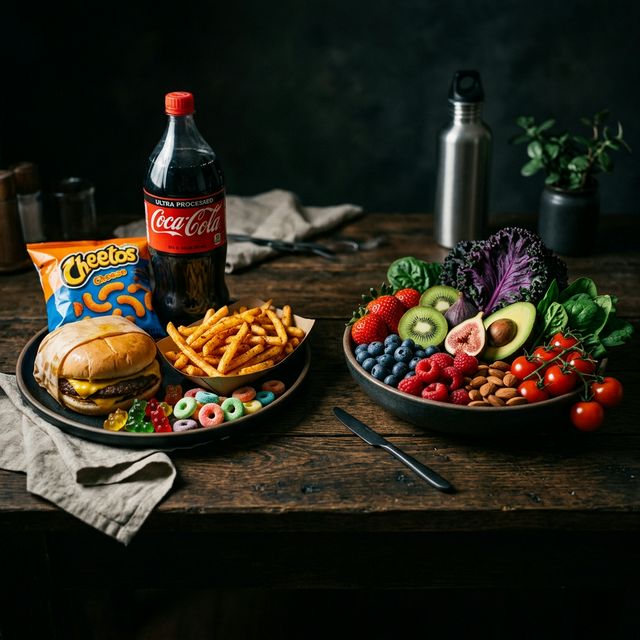
Walk through any supermarket and you'll notice something unsettling: the vast majority of products lining the shelves aren't really "food" in the traditional sense. They're industrial formulations — engineered in laboratories, manufactured in factories, and designed to be as irresistible as possible. Welcome to the world of ultra-processed foods (UPFs), and they now dominate the diets of millions across the United States, United Kingdom, Canada, and Australia.
A landmark 2024 umbrella review of 45 meta-analyses involving nearly 10 million participants found that diets high in ultra-processed foods are associated with 32 adverse health outcomes — from obesity and type 2 diabetes to heart disease, depression, and even early death. Yet most people have no idea which foods in their kitchen qualify as ultra-processed, or why these products are fundamentally different from other processed foods.
This comprehensive guide breaks down everything you need to know: what ultra-processed foods actually are, the complete list of the worst offenders, exactly how they damage your health, and — most importantly — how to replace them with whole-food alternatives that taste just as good.
What Are Ultra-Processed Foods? The NOVA Classification Explained
The term "ultra-processed" comes from the NOVA food classification system, developed by researchers at the University of São Paulo, Brazil. NOVA divides all foods into four groups based on the extent and purpose of processing:
- Group 1 — Unprocessed or minimally processed foods: Fresh fruits, vegetables, eggs, plain meat, fish, nuts, seeds, milk, plain yoghurt, grains, and legumes. These are natural foods altered only by processes like drying, freezing, or pasteurisation.
- Group 2 — Processed culinary ingredients: Oils, butter, sugar, salt, flour, and vinegar. These are extracted from Group 1 foods and used in home cooking.
- Group 3 — Processed foods: Canned vegetables (with salt), cheese, traditionally cured meats, freshly baked bread, and simple canned fish. These combine Group 1 and Group 2 ingredients using traditional methods.
- Group 4 — Ultra-processed foods: Industrial formulations that contain ingredients you'd never find in a home kitchen — high-fructose corn syrup, hydrogenated oils, emulsifiers, hydrolysed proteins, modified starches, artificial colours, flavour enhancers, and preservatives. These products are designed for convenience, hyper-palatability, and long shelf life.
🔑 The Key Distinction
The critical difference between processed and ultra-processed isn't whether food is "processed" — even washing lettuce is processing. The distinction is whether the product contains industrial additives and substances not used in ordinary cooking. If the ingredient list includes things like soy protein isolate, maltodextrin, invert sugar, or carboxymethylcellulose, it's ultra-processed.
The Complete Ultra-Processed Foods List
Here's the definitive category-by-category breakdown of ultra-processed foods, based on the NOVA classification and the latest research from the British Heart Foundation, Johns Hopkins University, and the NHS:
🥤 Beverages
- Fizzy drinks and colas (Coca-Cola, Pepsi, Sprite)
- Energy drinks (Red Bull, Monster, Prime)
- Flavoured waters with sweeteners
- Powdered and bottled fruit-flavoured drinks
- Sweetened iced teas and lemonades
- Most commercial coffee-shop drinks
🍞 Breads and Baked Goods
- Mass-produced sliced bread (including "whole grain" varieties)
- Packaged cakes, muffins, and doughnuts
- Commercial biscuits and cookies
- Packaged croissants and pastries
- Breakfast bars and cereal bars
🥣 Breakfast and Snack Items
- Most breakfast cereals (especially frosted or flavoured)
- Flavoured instant oatmeal packets
- Crisps (chips) and savoury snacks
- Chocolate and sweets
- Protein bars and energy bars
- Flavoured yoghurts and yoghurt drinks
🍕 Ready Meals and Convenience Foods
- Frozen pizzas and frozen meals
- Instant noodles and cup soups
- Boxed macaroni and cheese
- Pre-made sandwiches (from many retailers)
- Jarred pasta sauces with additives
- Microwave popcorn
🌭 Processed Meats
- Hot dogs, sausages, and frankfurters
- Deli meats (ham, turkey slices, salami)
- Chicken nuggets and fish fingers
- Beef jerky and meat sticks
- Bacon with additives beyond salt and smoke
Why Ultra-Processed Foods Are Dangerous: The Science
The health risks of ultra-processed foods go far beyond their high sugar, salt, and fat content. Research increasingly shows that the processing itself — the industrial additives, the destruction of the food matrix, and the hyperpalatable formulations — contributes independently to health damage.
Heart Disease and Stroke
A major study presented in March 2026 found that people consuming around nine servings of ultra-processed foods per day had a 67% higher risk of heart attacks, strokes, or death from cardiovascular disease compared to those eating the least UPFs. The mechanisms include chronic inflammation, elevated blood pressure, and disrupted cholesterol metabolism.
Obesity and Metabolic Dysfunction
Ultra-processed foods are engineered to override your body's natural satiety signals. In a rigorously controlled NIH study, participants given unlimited access to ultra-processed meals consumed an average of 500 extra calories per day compared to when they were offered unprocessed meals of identical nutritional composition. The result? They gained nearly a kilogram in just two weeks.
Cancer Risk
The WHO classifies processed meats (a subset of UPFs) as a Group 1 carcinogen — the same category as tobacco smoking — due to their established link with colorectal cancer. Broader UPF consumption has been linked to increased rates of breast, prostate, and pancreatic cancers in large-scale epidemiological studies.
Gut Health Destruction
Ultra-processed foods typically contain very little fibre while being loaded with emulsifiers and artificial sweeteners that damage the gut microbiome. Research shows that common food additives like carboxymethylcellulose and polysorbate-80 can thin the protective mucus lining of the gut, increase intestinal permeability ("leaky gut"), and promote inflammatory bowel conditions.
Mental Health Impact
A growing body of evidence connects high UPF consumption with increased rates of depression and anxiety. The gut-brain axis — the communication pathway between your digestive system and your brain — is disrupted by UPF-induced changes in the microbiome. Additionally, the blood sugar roller-coaster caused by refined carbohydrates in UPFs contributes to mood instability, brain fog, and energy crashes — the same mechanism described in our guide on how sugar affects your brain.
Track What You're Really Eating
SugarWise helps you log meals in seconds and instantly see your sugar, calorie, and macro breakdown. Set daily goals and get real-time alerts when you're approaching your limits.
How to Identify Ultra-Processed Foods: The 5-Second Rule
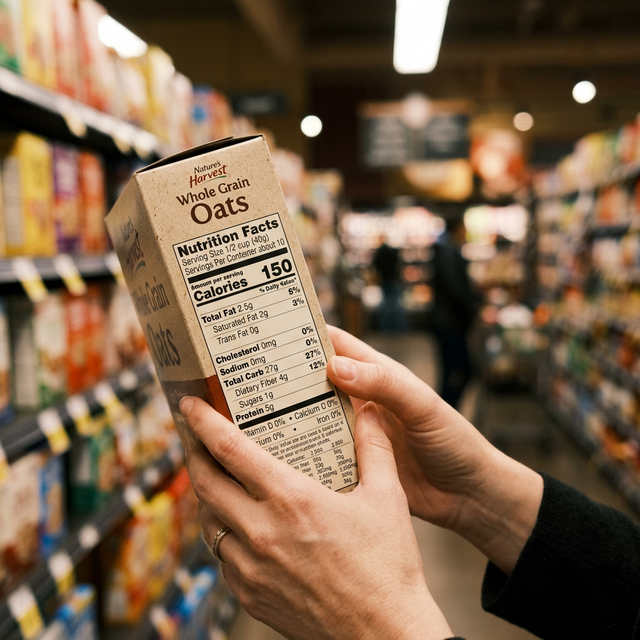
You don't need a nutrition degree to spot UPFs. Use this simple rule: flip the package over and scan the ingredient list. If it contains more than five ingredients, or includes any ingredient you wouldn't recognise or use in your own kitchen, it's almost certainly ultra-processed.
Red-flag ingredients to watch for:
- Emulsifiers: Lecithins, mono- and diglycerides, polysorbates
- Flavour enhancers: Monosodium glutamate (MSG), yeast extract, hydrolysed proteins
- Sweeteners: High-fructose corn syrup, aspartame, sucralose, acesulfame K
- Preservatives: Sodium benzoate, BHA, BHT, sodium nitrite
- Colourants: Tartrazine, sunset yellow, caramel colour
- Thickeners and stabilisers: Carboxymethylcellulose, xanthan gum, modified starch
7 Practical Swaps to Eliminate Ultra-Processed Foods
The good news? Replacing UPFs doesn't require a complete lifestyle overhaul. Start with these high-impact swaps that most people find surprisingly easy — and check our sugar swaps guide for even more ideas:
| Ultra-Processed | Whole-Food Swap | Sugar Saved |
|---|---|---|
| Flavoured yoghurt | Plain Greek yoghurt + fresh berries | ~18g per serving |
| Breakfast cereal | Rolled oats with banana and cinnamon | ~14g per serving |
| Jarred pasta sauce | Tinned tomatoes + garlic + olive oil + basil | ~8g per serving |
| Sliced white bread | Sourdough from a local bakery | ~3g per slice |
| Fizzy drinks | Sparkling water + lemon/lime | ~39g per can |
| Protein/energy bars | Handful of nuts + a piece of fruit | ~12g per bar |
| Instant noodles | Rice noodles + vegetables + soy sauce | ~5g per serving |
💡 The 80/20 Approach
Perfection isn't the goal — progress is. Research shows that reducing UPF consumption by even 20-30% produces measurable health improvements. Aim to make 80% of your diet whole or minimally processed foods, and allow 20% flexibility for convenience or social situations. Track your progress with a food tracking app to see your improvement over time.
Ultra-Processed Foods FAQs
What are ultra-processed foods?
Ultra-processed foods (UPFs) are industrial formulations made mostly or entirely from substances derived from foods and additives, with little or no intact whole food. They typically contain ingredients you wouldn't find in a home kitchen — emulsifiers, hydrolysed proteins, modified starches, hydrogenated oils, and artificial colours and flavours. Examples include soft drinks, packaged snacks, instant noodles, and reconstituted meat products.
How much of our diet is ultra-processed?
In the United States, ultra-processed foods make up approximately 58-73% of the average adult's daily calorie intake. In the UK, the figure is around 57%, and in Australia and Canada it's approximately 50-55%. These are among the highest rates globally.
What health problems are linked to ultra-processed foods?
A 2024 umbrella review of 45 meta-analyses involving nearly 10 million people found that diets high in UPFs are associated with 32 adverse health outcomes including obesity, type 2 diabetes, heart disease, stroke, depression, certain cancers, inflammatory bowel disease, and increased risk of early death.
Is all processed food bad?
No. There's a massive difference between processed and ultra-processed. Processing itself isn't inherently harmful — freezing vegetables, pasteurising milk, and canning tomatoes are all forms of processing that can actually improve nutrition access. The issue is specifically with ultra-processing, which adds industrial substances and strips away the food's natural nutritional matrix.
The Bottom Line: Your Health Is Worth the Switch
Ultra-processed foods have become so normalised in Western diets that many people don't even recognise them as problematic. But the science is now overwhelming: these industrial products are driving rates of obesity, heart disease, diabetes, cancer, and depression to unprecedented levels. The food industry spends billions engineering products that are as addictive as possible while providing minimal nutritional value.
The good news is that every UPF you replace with a whole food is an investment in your long-term health. You don't need to overhaul your entire diet overnight. Start with one swap this week — choose real food over a packaged product — and build from there. Your body, your gut microbiome, and your future self will thank you.
Awareness is the first step. The next is action. Start reading labels, cooking more meals from scratch, and tracking what you eat. Small changes, consistently applied, lead to extraordinary results.
Start Tracking Your Nutrition Today — It's Free
SugarWise makes it simple to see exactly what's in your food. Log meals in seconds, track sugar and macros in real time, and set personalised goals that keep you on track.