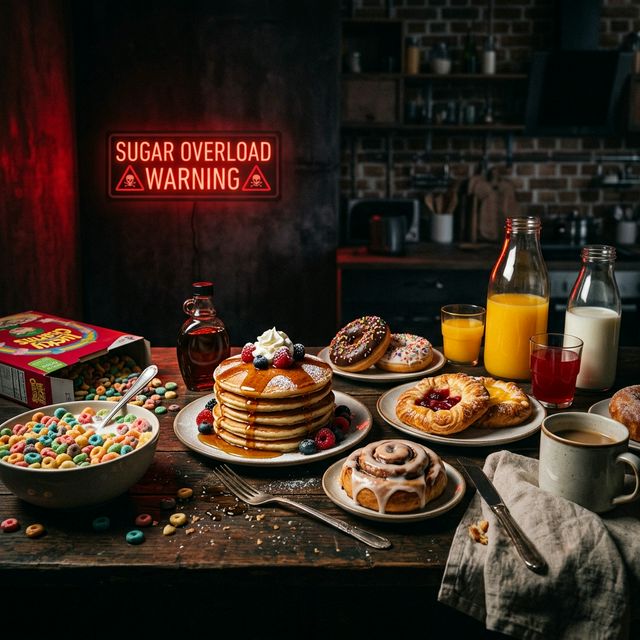
Breakfast is supposed to set the tone for your day. Get it right and you cruise through the morning with stable energy, sharp focus, and zero cravings. Get it wrong and you're crashing by 10am, starving by 11, and reaching for the biscuit tin by noon — all because of what you ate (or didn't eat) at 7am.
The cruel irony? Many of the foods people eat for breakfast thinking they're healthy are actually the worst possible choices for blood sugar. "Heart-healthy" cereals. "Low-fat" yoghurts. Fresh orange juice. Smoothie bowls. These foods spike your glucose faster than you can say "but the packaging said natural."
Here are the 10 worst offenders — plus a smarter swap for each one that'll keep you full, focused, and stable until lunch.
The 10 Worst Breakfast Foods
| Breakfast Food | Sugar per Serving | Better Swap | Sugar in Swap |
|---|---|---|---|
| Frosted cereal (Frosties) | 12g | Steel-cut oats + cinnamon | 1g |
| Orange juice (250ml) | 21g | Water with lemon + whole orange | 9g (fibre-bound) |
| Flavoured yoghurt | 19g | Plain Greek yoghurt + berries | 5g (natural) |
| White toast with jam | 16g | Sourdough + avocado + eggs | 1g |
| Granola | 14g | Homemade muesli (no added sugar) | 3g |
| Pancakes with syrup | 32g | Protein pancakes + berries | 4g |
| Shop smoothie | 30-50g | Homemade protein smoothie | 5g |
| Muffin (blueberry) | 28g | Egg muffins with veg | 1g |
| "Low-fat" bran muffin | 22g | Overnight oats + nut butter | 3g |
| Acai bowl (shop-bought) | 35-50g | Small acai base + protein + seeds | 8g |
Why These Breakfasts Wreck Your Day
1. Frosted/Sugary Cereals
Let's start with the obvious one. A bowl of Frosties, Coco Pops, or Lucky Charms is essentially dessert marketed as breakfast. You're looking at 12-15g of sugar per small serving — and nobody eats "one serving" of cereal. Two bowls with semi-skimmed milk puts you at 30g+ of sugar before you've left the house. Even "adult" cereals like Crunchy Nut or Special K Red Berries contain 10-12g per serving.
Better swap: Steel-cut oats with cinnamon and a handful of walnuts. Takes 5 minutes, delivers slow-release energy, and the fibre keeps you full for hours.
2. Orange Juice
People genuinely believe orange juice is healthy because it contains vitamin C. Here's the problem: a glass of OJ has 21g of sugar — just 5g less than a glass of Coca-Cola — and zero fibre to slow its absorption. Your blood sugar rockets up, insulin floods in, and 90 minutes later you're crashing. Eating a whole orange gives you the same vitamins but with fibre that prevents the spike.
3. Flavoured Yoghurt
"But it's yoghurt — it's healthy!" Not when it's got 19g of added sugar stirred in. That strawberry yoghurt pot contains more sugar per ounce than ice cream. The fruit flavouring is usually just sugar, colouring, and a distant memory of an actual strawberry.
Better swap: Plain full-fat Greek yoghurt (17g protein, 4g natural sugar) topped with fresh berries and a drizzle of honey if you need sweetness.
4. White Toast with Jam
White bread is a refined carbohydrate that behaves almost identically to sugar in your body — it hits your bloodstream fast. Stack jam on top (2 tablespoons = 10g sugar) and you've got a pure glucose bomb. No protein, no fat, minimal fibre. Peak blood sugar within 30 minutes, crash by mid-morning.
5. Granola
The ultimate health food fraud. Granola is marketed alongside images of mountain hikers and dewy mornings, but it's hiding 10-14g of sugar per tiny serving. Most granolas are oats baked in honey, maple syrup, or sugar — plus dried fruit (concentrated sugar) and chocolate chips. A bowl with yoghurt can easily exceed 35g of sugar.
How Much Sugar Is Really in Your Breakfast?
Most people have no idea. SugarWise shows you the real sugar content of your meals instantly — no guessing, no nasty surprises.
6. Pancakes with Syrup
A stack of white-flour pancakes drenched in maple syrup delivers a staggering 32g of sugar from the syrup alone — and the refined flour in the pancakes adds to the glucose load. Your body has to deal with the equivalent of eating 8 sugar cubes in one go. The blood sugar spike is brutal.
7. Shop-Bought Smoothies
A Naked or Innocent smoothie can contain 30-50g of sugar per bottle. That's more than a can of Coke. Yes, it's "natural" sugar from fruit — but your body processes it identically when the fibre has been blended and pulverised. The fructose hits your liver, insulin spikes, and the "healthy" drink has done the same metabolic damage as a fizzy drink.
8. Blueberry Muffins
A coffee shop blueberry muffin is cake. Full stop. It contains 28-35g of sugar, 400+ calories, refined flour, and butter. The 6 blueberries clinging to the top do not make it a health food. The "bran muffin" option is barely better — most contain 22g of sugar despite the wholesome name.
9. "Low-Fat" Breakfast Products
When companies remove fat, they replace it with sugar to maintain palatability. Low-fat muffins, low-fat yoghurts, low-fat cereal bars — they're all ultra-processed products with added sugar compensating for the missing fat. Fat isn't the enemy at breakfast — sugar is.
10. Acai Bowls
The Instagram darling. A shop-bought acai bowl looks beautiful and healthy, but the base is typically acai blended with apple juice and banana (all sugar sources), topped with granola (more sugar), honey (more sugar), and sometimes chocolate chips. Total sugar: 35-50g per bowl. You were better off eating a chocolate croissant — at least you'd know what you were getting.
What a Blood Sugar-Friendly Breakfast Looks Like
🥇 The Perfect Blood Sugar Breakfast Formula
Protein (25-30g) + Healthy Fat + Fibre + Minimal Added Sugar (<5g). Examples: Eggs + avocado + sourdough. Greek yoghurt + berries + seeds. Protein smoothie (whey + spinach + nut butter). Omelette with vegetables. These combinations keep blood sugar flat, energy stable, and cravings nonexistent until lunch. Read more in our low-sugar breakfast guide.
Worst Breakfast FAQs
What is the healthiest breakfast for blood sugar?
Eggs with avocado and vegetables. 20g+ protein, 2g sugar, stable energy for 4-5 hours. Greek yoghurt with berries is a close second. The golden rule: protein first, sugar never.
Is cereal really that bad?
Most commercial cereals contain 10-15g of sugar per serving — and servings are tiny (30g, about a handful). At normal portions, you're eating 20-30g of sugar before leaving the house. Some exceptions exist (plain porridge oats, Weetabix), but always check the label.
Is fruit juice healthy for breakfast?
No. Fruit juice is sugar water with vitamins. A glass of OJ (21g sugar) is metabolically similar to a glass of Coke (26g sugar). Eat whole fruit instead — the fibre makes all the difference.
Fix Your Morning, Fix Your Day
Your breakfast sets the metabolic tone for the next 12 hours. Start with a blood sugar spike and you'll be chasing crashes and cravings all day. Start with protein, fat, and fibre, and you'll coast through to lunch with steady energy and zero desire to raid the vending machine. Every swap on this list takes the same amount of time to prepare. The only thing that changes is the outcome.
Track Your Breakfast Sugar
SugarWise shows you exactly how much sugar is in your morning routine — and helps you swap to breakfasts that fuel your day, not wreck it.